Junior/Inexperienced developers need more guidance than ever, and they think they don’t (or I should say “they even don’t realized they need”). AI-coding tools may make them feel they need less of guidance. They can build features, fix errors quickly, and that helps them keep moving faster and faster with very little experience. Seeing the output they generated with AI tools can give them confidence.
That puts more responsibility on senior developers, we (as senior developers/engineers) need to get involved even when nobody is asking for help.
Getting stuck used to create a conversation
Before the AI era, when a junior developer felt stuck, he would start a conversation with a senior developer; that does not happen as often now.
During those conversations, a senior developer would not only unblock the junior developer but also fill in the gaps, provide more context and help him correct mistaken assumptions. This is disappearing now.
The solution AI generated will work but it can still miss the bigger picture.
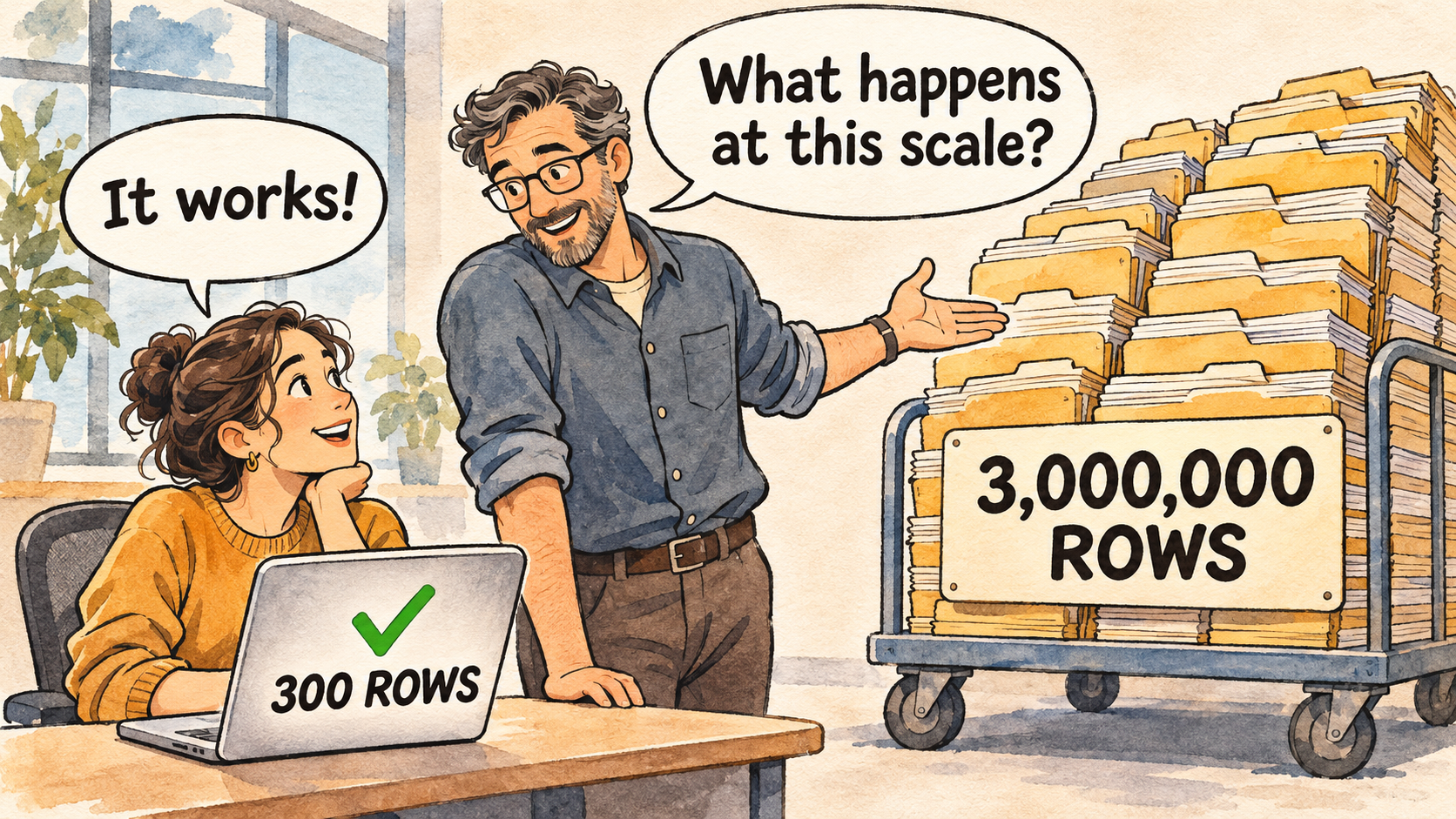
Here is a simple example; Let’s imagine a junior developer who is tasked with adding a report export function to your web application. He uses Claude Code/Codex, he builds the endpoint, and tests it with a few hundred records, and downloads the file.
Voilà, it works. Right?
But some will have customers have millions of records, and preparing their reports will take several minutes. That request will probably time out before the file is ready. Your team already has a background worker for this kind of job, but the junior does not know when to use it.
Claude Code/Codex can help the junior developer use the worker, of course, there is no doubt here. But he needs to know that this is something to ask about (or learn about); he does not know what he does not know. Why would he ask when the file downloads and the tests pass?
Someone who understands/knows the bigger picture needs to provide that context, so the junior does not waste time going in the wrong direction.
I discussed this in Why 90% of Engineers Can’t Debug: understand the whole system before focusing on one part.
Seniors need to get involved earlier
The previous example helps to explain my point about why seniors need to get involved, but just getting involved is also not enough. Senior developers need to get involved at the beginning by providing context and guidance. Context and rules are also two parts of my SCORE framework. The junior needs help understanding what those should be. As in the past, it is still important to give junior developers room to make mistakes and learn. A senior developer needs to find the right balance here.
Help juniors develop judgment
There is one fundamental difference now compared to the past. AI tools are handling most of the coding, and that means junior developers need to develop their judgment (not their coding skills). That is slightly harder for both junior developers and senior developers. It is easy to say, “This won’t compile because you forgot a semicolon,” but it is hard to explain the bigger picture. That also puts more responsibility on senior developers; they need to explain the architectural justifications and their own thinking process, they need to explain their instincts. If you are a senior developer, here is one take from this article; do not wait for a junior to ask for help. Go and ask what he is building, and question why he chose that approach. When you find there is a gap, explain the context he is missing.
The junior developer may no longer feel stuck, but that does not mean he no longer needs a guidance.